How Long Should an Office Chair Last?
A decent office chair should last 5 to 10 years. Budget chairs often give out in 2 to 3 years, while a well-built task chair with a Class 4 gas lift and a steel or nylon base can run longer if you keep the casters and cylinder in good shape.
On this page (9 sections)
- How long should an office chair last by build type?
- Which parts fail first, and when?
- How do you know when to repair and when to replace?
- How long do casters last, and when should you swap them?
- When does a gas lift need replacing?
- What shortens an office chair's life?
- How can you make an office chair last longer?
- Which office chair is built to last?
- The bottom line on office chair lifespan
A decent office chair should last 5 to 10 years. Budget chairs often give out in 2 to 3 years, while a well-built task chair with a Class 4 gas lift and a steel or nylon base can run longer if you keep the casters and cylinder in good shape.
That range assumes normal daily use at a desk. A chair shared around the clock or pushed past its weight rating will wear faster than one used by a single person for a few hours a day.
How long should an office chair last by build type?
Budget chairs typically last 2 to 3 years, mid-range chairs 5 to 7 years, and commercial-grade chairs 7 to 10 years or more. The gap comes down to the parts you can't see from the product photo.
A budget chair often uses a thin base, a lower-grade gas lift and plastic casters that crack within a couple of years. A commercial chair spends more on the frame, the cylinder and the mechanism, so the wear parts are the only things that need attention.
These are typical figures, not guarantees. How you use the chair and how often you replace small parts decide where in the range yours lands.
If you want a chair built for long workdays from the start, our guide to the home office chair breaks down what to look for.
Which parts fail first, and when?
The casters fail first, then the gas lift cylinder. Seat foam and the tilt mechanism come after that.
Most failures show up as small, fixable problems before the frame gives out.
Casters take the most abuse because every roll puts load on the wheels and bearings. A cheap set may start squeaking or flat-spotting within 2 to 3 years.
The gas lift is next; a cylinder that starts sinking has usually lost its pressure seal, which is common after 3 to 5 years of daily use.
Seat foam flattens gradually over 4 to 6 years. The tilt mechanism and armrests are slower to wear.
A wobble in the base or a cracked backrest frame is the point where the chair as a whole is usually done.
How do you know when to repair and when to replace?
Repair the chair if the frame, seat and backrest are still solid and the problem is a wear part. Replace it when the base is cracked, the backrest frame is broken, or several parts fail at once.
Sinking is the classic repair case. Replacing the cylinder fixes it for a fraction of a new chair.
Noisy or sticky rolling is another easy fix; swapping the casters brings back smooth movement.
A wobbly chair is worth a closer look too. If the looseness is in the tilt mechanism or a base bolt, you can often tighten it rather than bin the chair.
Our walkthrough on how to fix a wobbly office chair covers the likely causes in order.
Replace the chair when the wobble comes from a split in the base or a bent backrest frame. Those parts carry your weight, and a repair is not safe.
How long do casters last, and when should you swap them?
Most casters last 2 to 4 years under daily use. Replace them when they squeak, flat-spot, or start leaving marks on your floor.
A fresh set is one of the cheapest ways to extend a chair's life.
The Lifelong set is a heavy-duty replacement that suits most rolling office chairs. Its polyurethane wheels are designed to roll quietly and protect hard floors without a chair mat.
The stem measures 7/16 by 7/8 inches, and the set fits chairs except IKEA models and some off-brand chairs.
Check the stem size on your old wheels before you order. If the stubs match, the swap takes a few minutes and needs no special tools.
Our step-by-step guide on how to replace office chair wheels walks through the process.
Skip this set if you own an IKEA chair or your current stem is a different size. Also skip it if you roll mostly on deep-pile carpet, where wider casters usually glide more smoothly.
When does a gas lift need replacing?
A gas lift needs replacing when the seat sinks on its own or won't hold your set height. That usually happens after 3 to 5 years of daily use.
A new cylinder restores the height adjustment without touching the rest of the chair.
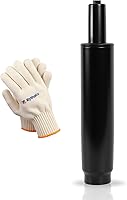
The Office Oasis cylinder is a Class 4 replacement kit that includes a removal tool, gloves and instructions. The piston shaft is 1-1/8 inches in diameter and the column is 2 inches, a size The Office Oasis says fits almost every office chair, including the Herman Miller Aeron.
The company backs it with a lifetime warranty.
Measure the old cylinder before ordering so the fit is right. The included tool makes the swap easier than prying the old cylinder out with household tools.
Skip this kit if your chair's base or seat is already failing. A new cylinder won't fix a frame that has gone soft.
What shortens an office chair's life?
Overloading, dragging instead of rolling, and skipping small repairs are the three big life-shorteners. Each one puts extra strain on a part that was not built for it.
Exceeding the weight rating stresses the base, cylinder and mechanism all at once. Dragging a chair sideways instead of rolling it twists the casters and can loosen the base over time.
Letting a squeak or a slight sink go unfixed usually turns a cheap part replacement into a bigger repair.
Other factors matter too. Rolling on rough flooring wears casters faster than smooth hardwood.
A chair left in direct sun or a damp room can see foam and fabric degrade sooner. Heavy daily use across shifts shortens the timeline compared with a home desk.
How can you make an office chair last longer?
Stay within the weight rating, roll rather than drag, and replace casters and the cylinder when they first show wear. Those three habits cover most of what actually fails.
Wipe the mechanism and casters now and then to clear dust and hair. Check base bolts and armrest screws a couple of times a year.
If the chair wobbles, fix it early rather than waiting for it to loosen further.
Set the height correctly too. A chair that is too high or too low pushes you to perch or slouch, which adds strain and shortens how long you can sit comfortably.
Our guide on how high should your office chair be explains the right setup.
When the seat foam flattens before the frame does, a cushion can buy time. But once the base or backrest frame is compromised, a new chair is the safer choice.
Which office chair is built to last?
A certified task chair with a Class 4 lift and a strong frame is the best base for a long life. You can extend it further with replaceable casters and a cylinder when they wear.
The GABRYLLY BIFMA Mesh Task Chair is a mid-back ergonomic chair with an adjustable lumbar support and 3D armrests. It uses a Class 4 gas lift, a heavy-duty base and a Y-shaped backrest frame, and GABRYLLY says it is BIFMA 5.1 certified and supports up to 300 lb.
It fits users from 5'2" to 6'3".
It suits someone who wants one chair for years of long workdays rather than a cheap model replaced every couple of years. Check your desk height against its adjustment range first.
GABRYLLY offers a custom gas lift if the standard one doesn't match your setup.
Skip it if you need a chair for very short or very tall users outside its stated range. For a wider set of long-day options, compare the best home office chairs.
The bottom line on office chair lifespan
Expect 5 to 10 years from a good office chair and 2 to 3 from a budget one. The answer to how long should an office chair last depends more on the parts than the price.
Pick a certified chair if you want the longest run. Replace casters and the cylinder as they wear and you'll get years more from the same seat.
Pick a budget chair only if you're happy to replace it sooner.
Frequently asked questions
What part of an office chair wears out first?
The casters usually fail first, followed by the gas lift cylinder. Seat foam flattening and wobble in the tilt mechanism come next.
These are the cheap, easy parts to replace before you spend money on a whole new chair.
Is it worth replacing a gas lift instead of buying a new chair?
Yes, when the frame and seat are still solid. A Class 4 replacement cylinder costs far less than a new chair and fixes the sinking problem directly.
A chair with a cracked base or a broken backrest frame is usually not worth repairing.
Does a more expensive office chair always last longer?
Not always, but the parts matter more than the price tag. Look for a certified gas lift, a steel or heavy-duty nylon base, and replaceable casters.
A mid-range chair built that way often outlasts a cheap one with decorative extras.