Mesh vs Fabric Office Chair: Which Suits You? (October 2026)
Choose mesh for an open back and fabric for a padded, upholstered feel. Your best fit depends on whether you prefer a flexible mesh back or a softer seat and back surface.
On this page (7 sections)
Choose mesh for an open back and fabric for a padded, upholstered feel. In a mesh vs fabric office chair comparison, the useful choice is the surface you want against your back and seat, plus the adjustments that help you sit at your desk.
Mesh and fabric aren't always opposites across the whole chair. A mesh-back chair can have a cushioned seat, while a fabric chair may vary in padding, back height and tilt.
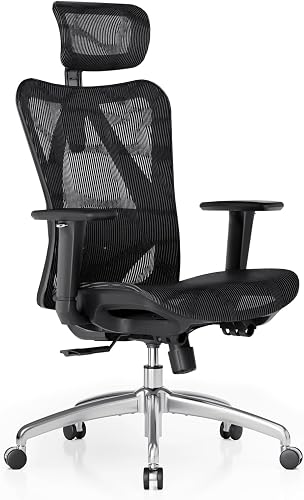
The SIHOO M57 is the mesh option here, with an adjustable headrest and lumbar support. The AMSEATEC and BRTHORY use fabric upholstery and double-layer seat cushions.

Mesh vs fabric office chair: which should you choose?
Choose a mesh back if you want an open backrest, and choose fabric if you prefer an upholstered surface with padding. Consider the seat separately, since many chairs combine a mesh back with a cushioned seat.
Mesh has a more open structure than cloth upholstery. Fabric covers the seat or back with a woven surface, often over padding.
That basic difference doesn't tell you how supportive or comfortable a chair will feel. Back shape, lumbar support, seat depth, height range and arm position all affect fit.
Is a mesh office chair better for airflow?
Mesh offers a more open backrest than solid fabric upholstery. If your back tends to feel warm against a chair, start by comparing back materials and designs.
The SIHOO M57 has a mesh back and a polyester-filled seat. Its lumbar support moves in height and depth, so you can adjust where it meets your lower back.
Mesh doesn't guarantee that the whole chair feels cool. A thick cushion, room conditions and your clothing still affect how warm the seat feels.
For more on mesh backrests, see our guide to whether mesh-back office chairs are a good fit. It can help you decide if the open back design suits your work habits.
Does fabric feel softer than mesh?
Fabric chairs with padded seats give you an upholstered surface and cushioning beneath you. The AMSEATEC has a double-layer cushion, and the BRTHORY combines cloth fabric with a double-layer foam seat.
The AMSEATEC uses linen fabric and a soft supportive cushion. It also has padded, flip-up arms, which can be useful if you want a softer contact point at the elbows or need to slide the chair under a desk.
The BRTHORY has breathable cloth fabric, a double-layer foam cushion and a high back with built-in lumbar support. Its padded arms also flip up.
Softness is a matter of feel, and the details don't tell you how firm either seat will seem to you. If cushion feel matters, focus on the seat construction and the seller's current return terms before ordering.
How do the three chairs differ?
The SIHOO M57 focuses on mesh and adjustable back support, while both fabric chairs focus on padded upholstery and flip-up arms. The details below show which trade-offs each model makes.
| Product | Best for | Back | Lumbar support | Recline | Our score |
|---|---|---|---|---|---|
| SIHOO M57 Mesh Office Chair | a mesh back | Mesh | Height and depth adjustable | 90° to 126° | 8.6 |
| AMSEATEC Fabric Task Chair | a soft fabric seat | 7.4 | |||
| BRTHORY Fabric High Back Chair | a fabric high back | High back with lumbar support | 7.0 |
The M57 offers the broadest adjustment details of these three options: its headrest tilts and lifts, its lumbar support shifts in height and depth, and it reclines from 90° to 126°. Its back is high, and its seat has a waterfall edge.
The AMSEATEC is a mid-back fabric chair with a double-layer cushion and padded flip-up armrests. Its tilt tension control lets you adjust and lock the tilt, though no angle range is specified here.
The BRTHORY pairs a high back and built-in lumbar support with cloth upholstery and a foam cushion. Its stated rocking range is 90° to 120°, and its arms flip up.
Which chair fits your sitting preferences?
Match the chair's contact surfaces and adjustments to what you notice during a normal workday. A material preference can narrow the choice, but fit still depends on your body and desk.
Who should choose the SIHOO M57?
The M57 suits you if you want a mesh back and the ability to reposition lumbar support. Its headrest adjusts in height and tilt, and the chair reclines from 90° to 126°.
Its waterfall-edge seat is designed to support the thighs, while the mesh back keeps the backrest material separate from the seat material. The chair also swivels and has a smooth height lift.
Choose it if those back and recline adjustments matter more than an upholstered back. Before deciding, check the chair dimensions against your available space and desk height.
Who should choose the AMSEATEC?
The AMSEATEC suits you if you prefer fabric upholstery, a double-layer cushion and padded arms that flip up. Its mid-back shape may also work when you don't want a high-back chair.
The maker describes the linen fabric as breathable and easy to care for. Its tilt tension control can be adjusted and locked, and the chair's height and swivel can be adjusted.
Choose this option if you want a soft seat and arms that clear the desk when raised. Check whether a mid-back gives you the back coverage you want.
Who should choose the BRTHORY?
The BRTHORY suits you if you want a fabric high back, built-in lumbar support and flip-up padded arms. Its seat uses a double layer of high-density foam, and its tilt range is 90° to 120°.
The chair's high back may appeal if you want more back coverage than a mid-back offers. Its flip-up arms can help you store it under a desk or clear space in a compact office.
Choose it when those features matter more than the M57's deeper lumbar adjustment or wider recline range. Check the chair's listed dimensions and your desk clearance before choosing a place for it.
Which chair is easier to maintain?
Choose based on the cleaning steps you are willing to follow for the chair's fabric or mesh surfaces. Dust and spills are easier to handle when you follow material-specific care instructions.
Fabric can hold dust and absorb spills, so blot liquids promptly and avoid rubbing them deeper into the upholstery. Check the chair's care instructions before applying a cleaner or using water.
Mesh can collect dust in its openings. Use a vacuum attachment or soft brush that won't snag the fabric, and avoid pressing hard on the backrest.
Our guide explains how to clean an office chair, fabric or mesh. For more fit and setup context, see how ergonomic chairs differ from regular chairs.
Will a mesh or fabric chair suit a small office?
A chair with flip-up arms may be easier to store beneath a desk, but measure the chair and your available clearance first. Material alone doesn't determine how much room a chair needs.
The AMSEATEC and BRTHORY both have arms that flip up. That can free space beside a desk or make it easier to push the chair under the work surface.
Compare each chair's width and depth with the space where it will sit. Also check the height beneath your desk, since raising the arms doesn't make the chair itself smaller.
If comfort depends on your desk arrangement, our guide to making an office chair more comfortable covers practical adjustments to try. It can help you assess the setup before replacing a chair.
What should you check before choosing?
Check the seat, back, adjustability and room fit as separate details. A material label alone doesn't tell you whether the chair matches your posture or workspace.
First, decide whether you prefer mesh at your back or fabric upholstery. Then check whether the seat is padded, whether the back height suits you, and whether lumbar support can be positioned where you need it.
Next, compare the adjustments you expect to use. The M57 has adjustable lumbar support and headrest positions, while the two fabric options include flip-up arms; the M57 and BRTHORY also give stated recline or tilt ranges.
Finally, measure your desk opening and floor area. Account for arm height, chair depth and room to move the chair in and out.
The simple choice between mesh and fabric
Pick the SIHOO M57 if you want a mesh back with adjustable lumbar support; pick a fabric chair if a padded, upholstered surface is your priority. Choose AMSEATEC for a mid-back with a double-layer cushion, or BRTHORY for a fabric high back with built-in lumbar support.
If your main concern is fit, compare seat height, back shape and desk clearance before choosing by material. Our high-back vs mid-back chair guide explains how back height changes the choice.
Frequently asked questions
Is a mesh or fabric office chair better?
A mesh chair suits you if you want an open mesh back, while a fabric chair suits you if you prefer an upholstered surface and padded cushion. Compare the full chair, since a mesh back can still have a cushioned seat, and fabric chairs differ in back height, padding and adjustments.
Is mesh cooler than fabric?
An open mesh back allows air to pass through the backrest, while fabric upholstery covers the chair surface. That difference may matter if your back feels warm against a solid chair, but room temperature, clothing and the seat material also affect comfort.
What does a cushion office chair mean?
A cushion office chair has a padded seat, often with foam beneath an upholstered cover. The phrase doesn't tell you whether the back is mesh or fabric, so check both surfaces and look for details such as cushion layers and back support.
How do you clean a fabric or mesh office chair?
Start by checking the chair's care instructions, then remove loose dust with a suitable vacuum attachment. Use a gentle method that fits the material, and avoid soaking fabric or applying cleaners to mesh without checking their compatibility.
See our guide to cleaning a fabric or mesh office chair.
Can a mesh office chair have a cushioned seat?
Yes. Mesh can describe the backrest while the seat uses foam and upholstery, so a mesh-back chair may still feel padded beneath you.
Check the seat material and shape separately from the back before choosing.


