Executive Chair vs Office Chair: What Changes? (October 2026)
Executive chairs usually have padded, upholstered backs; office chairs often offer more task-focused adjustments and breathable mesh. Compare the exact chair features and how you work, since the labels alone don't guarantee comfort or fit.
On this page (6 sections)
Executive chairs usually have padded, upholstered backs; office chairs often offer task-focused adjustments and breathable mesh. For an executive chair vs office chair choice, compare how each fits your desk, work habits and preference for padding or airflow.
The terms overlap. An executive chair is still an office chair, and some office chairs have high backs, headrests and padded seats.
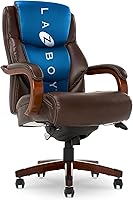
These examples show the practical differences: a padded COLAMY executive chair, a mesh Staples task chair and a PU leather Furmax executive chair.


Executive chair vs office chair: what changes?
The biggest differences are often upholstery, airflow and the adjustments included. A category name can't tell you exactly how a chair will fit.
Executive styles commonly use solid, upholstered backs and a more padded look. Task chairs often put greater emphasis on adjustable parts and materials such as mesh, though there are many exceptions.
The COLAMY and Furmax both have high backs and upholstered finishes. The Staples Dexley has a mesh seat and back, adjustable lumbar support, arms and headrest, plus a three-position tilt lock.
Those details matter more than the label. Check each chair's controls and measurements against your body and workspace.
Is an executive chair just a high-back chair?
No, a high back is one feature, not a full definition. High-back task chairs exist, and executive chairs can differ in materials, padding and adjustment range.
The COLAMY has a high back with a padded headrest and inflatable lumbar support. The Dexley also has a high back and headrest, with adjustable headrest height and angle.
Think about where you want support and whether the headrest can be positioned to suit you. If back height is your main concern, see our guide to high-back versus mid-back chairs.
Which chair gives you more adjustment?
The Dexley lists the widest set of adjustable parts among these 3 chairs. The COLAMY and Furmax offer useful controls too, but their specified adjustment details differ.
The Dexley allows adjustment to seat height, lumbar support, armrest height and headrest height and angle. Its tilt tension and three-position lock let you change recline resistance and lock position.
The COLAMY offers adjustable seat height and inflatable lumbar support, along with tilt that can be locked upright. The Furmax offers pneumatic seat-height adjustment and an adjustable tilt tension knob.
Count the adjustments you will actually use. A longer feature list only helps if the controls can be set to suit your posture and desk.
Do adjustable arms matter?
Adjustable arms can help you set elbow support around your desk height. Check whether they move in the direction you need and whether they fit beneath your desk.
The Dexley's arm height adjusts. The COLAMY's padded arms flip up to make it easier to move the chair under a table or create an armless mode.
The Furmax product details conflict: its features include arm rests, while its specification labels the arm style as armless. Verify the exact configuration before choosing it if arms are important to you.
For more help weighing arm support against desk clearance, read whether an office chair should have arms.
Is mesh or upholstery better for your room?
Mesh allows airflow, while padded upholstery gives you a more covered surface. Choose by room temperature, preferred feel and how you want to clean the chair.
The Dexley has a mesh seat and back. Its open material promotes airflow, which can be helpful during extended work in a warm room.
The COLAMY has a leather finish, and the Furmax uses PU leather. Both describe wipe-clean surfaces, but neither should be treated as the same material as mesh.
Mesh can feel different from a padded seat, so check the seat design as well as the back. Our guide to mesh-back office chairs explains what to consider.
Which chair fits a long workday?
Choose based on fit, support and the adjustments you'll use through the day. The executive or task label doesn't tell you how comfortable a chair will be for you.
The Dexley is described for 5–10 hours of daily use and supports up to 275 lb. COLAMY describes its chair for work or gaming sessions and gives a 300 lb capacity.
Those figures are product details, not a guarantee that either chair will fit every body or work routine. Check the seat measurements, back height and weight capacity against your needs.
If you want a broad selection focused on sustained desk use, compare options in our home office chair picks for long workdays.
How should you compare the 3 chairs?
Start with the feature that matters most to your setup, then confirm the dimensions and controls. That makes the choice clearer than comparing labels alone.
| Chair | A good fit if you want | Check before choosing |
|---|---|---|
| COLAMY High Back Executive Chair | Padded leather finish, inflatable lumbar support and flip-up arms | High-back clearance and whether you want an upholstered surface |
| Staples Dexley Mesh Task Chair | Mesh seat and back with several adjustable parts | Whether mesh suits your preferred seat feel |
| Furmax High Back Executive Chair | PU leather, lumbar support and height and tilt controls | Its arm configuration, which is described inconsistently |
The Dexley has the highest score here because its listed adjustments and mesh construction give more ways to tune a task setup. The COLAMY follows for its adjustable lumbar support and practical flip-up arms; the Furmax scores for its straightforward high-back upholstered design.
Our score weighs specs and features against what you're shopping for.
Which should you choose?
Pick the COLAMY for padded executive styling and flip-up arms, or the Dexley for mesh and more adjustable parts. Pick the Furmax if you want a high-back PU leather chair with basic height and tilt controls.
Before deciding, measure your desk and available chair space. Confirm the seat height range, back clearance and arm configuration that matter for your setup.
For the broader difference between chair names, continue to office chair vs desk chair. If you want an executive-style shortlist, see our best executive office chairs.
Frequently asked questions
What is the difference between an executive chair and an office chair?
An executive chair usually has a taller, padded, upholstered design, while an office chair is a broad category that includes task chairs with mesh backs and multiple adjustments. These labels aren't strict standards, so compare the back, seat material, lumbar support, armrests and tilt controls on each model.
Is an executive chair better for long hours?
Not by name alone. For long work sessions, check whether the chair's seat height, lumbar support, armrests and recline can be adjusted to fit you, and whether its material suits your room.
A breathable mesh task chair may suit a warm space, while padding may feel preferable to some people.
Are executive chairs more comfortable?
Comfort depends on fit and features, not the executive label. A padded high back may appeal if you want an upholstered feel, but check seat dimensions, lumbar placement and desk clearance.
If you need more ways to tune your sitting position, compare the chair's actual adjustments.
Should I choose mesh or leather for an office chair?
Choose mesh if airflow is a priority, since an open mesh back and seat allow air to circulate. Choose an upholstered leather or PU leather finish if you prefer a padded surface that can be wiped clean.
Material names vary, so check the exact chair description.