Different Types of Office Chairs Explained
The main types of office chairs are task chairs, ergonomic mesh chairs, executive chairs, big-and-tall chairs, guest chairs, and stools or draft chairs. Each style suits a different desk setup, body type and length of sitting, so the best type is the one that matches how you work.
On this page (8 sections)
- What are the main types of office chairs?
- Ergonomic mesh chairs and when they suit you
- Executive chairs: style, padding and a formal office
- Guest chairs, stools and draft chairs
- Which office chair type fits your desk and room?
- How to match a chair type to your body
- Common mistakes when choosing an office chair type
- So which type of office chair should you buy?
The main types of office chairs are task chairs, ergonomic mesh chairs, executive chairs, big-and-tall chairs, guest chairs and stools or draft chairs. Each one fits a different desk, body type and stretch of sitting.
Most homes and offices mix two or three types. A task chair at the main desk, a stool at a standing bench and a simple guest chair for visits covers most everyday needs without crowding the room.
The sections below walk through each type in plain terms. For a single recommendation to start with, the SIHOO M18 is the chair we would choose for most people who sit at a desk for hours.
What are the main types of office chairs?
Office chairs split into a handful of clear types, and the split comes down to what each chair is built to do. A task chair supports focused desk work, an executive chair signals status and comfort, and a guest chair is there for short visits.
Here is how the types line up:
| Type | Built for | Typical features |
|---|---|---|
| Task chair | Everyday desk work | Swivel base, wheels, seat height adjust |
| Ergonomic mesh chair | Long sessions, warm rooms | Mesh back, lumbar support, headrest |
| Executive chair | Style and cushioned comfort | Leather, thick padding, wooden base |
| Big and tall chair | Heavier users and taller frames | Higher weight rating, wider seat |
| Guest chair | Short visits and meetings | Fixed frame, basic padding |
| Stool or draft chair | Standing desks, counters | Tall base, footring, smaller seat |
The type label matters less than the fit. A stylish executive chair with the wrong seat depth is worse for your back than a plain task chair set to your height.
Task chairs make up the largest share of what people buy for a home office. They are the safe default when you are not sure which type you need.
Task chairs: the everyday default
A task chair is built around adjustable height and a wheeled swivel base, so you can move between desk and printer without standing up. Most have a seat height lever and a basic tilt.
These chairs suit a desk you use for email, writing and video calls. They keep a low profile, so they slide under most desks and fit below shelves.
The trade-off is padding. Many budget task chairs use thin foam over a firm seat, which is fine for a few hours but less comfortable for a full day.
If you sit six hours or more, look for a task chair with lumbar support and a seat depth that leaves a small gap behind your knees. A plain fixed-height stool does neither.
Task chairs also set the base for other types. The ergonomic mesh chair and the big-and-tall chair are both task chairs with extra features built in.
Ergonomic mesh chairs and when they suit you
Ergonomic mesh chairs are the type to pick when you sit for hours and want air moving across your back. The mesh back flexes with you and stays cooler than solid foam or leather.
The SIHOO M18 shows what this type includes: four support points at the head, back, hips and hands, plus adjustable lumbar support. It is sized for people 5'6" to 6'2" tall.
The mesh keeps your back cool and the flexing fabric follows your posture as you lean. A headrest helps between tasks or on long calls, and the seat height, headrest and lumbar support all adjust.
The type has real limits. Mesh offers less padded comfort than leather, so people who like a soft, sink-in seat may prefer an executive model.
Mesh also needs a sturdy frame to keep its shape, and this one uses a stainless steel frame rated to hold 330 lb.
If you are weighing mesh against leather, read are mesh back office chairs good for the full comparison of airflow, feel and care. The short answer is that mesh wins for warm rooms and long sitting, while leather wins for looks and cushioning.
Pick mesh if your office runs warm or you sit most of the day. Pick leather or fabric if you want a padded, formal seat and sit in shorter bursts.
Executive chairs: style, padding and a formal office
Executive chairs are the type for buyers who want a cushioned seat and a polished look in a home office. They usually come in leather or faux leather with a solid base and thicker padding.
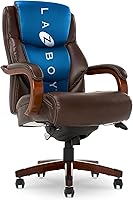
The La-Z-Boy Big and Tall Executive Chair fits this description. It has bonded leather upholstery with double-stitching and real wood arms and base in a mahogany finish.
Its seat uses ComfortCore memory foam over thick padding, and the back has body pillows plus targeted lumbar support. Seat height and tilt tension adjust to your position.
The type trades airflow for cushioning. Leather and faux leather hold warmth, so an executive chair suits a cooler room better than a hot one.
The wooden base and arms also add weight and cost compared with a plastic task chair.
That heavier build does bring a benefit: this chair supports up to 350 lb and rolls on dual-wheel casters that run quietly on carpet.
For more options in this style, see our roundup of the best executive office chairs. Compare seat depth and height range across models, since executive chairs vary a lot in how they fit different frames.
Choose an executive chair if your office doubles as a meeting space and you want the room to look finished. Choose mesh or fabric if comfort through a long, warm day matters more than the look.
Big and tall chairs: support for larger frames
Big and tall chairs are executive or task chairs built for heavier users and taller bodies, with a wider seat and a higher weight rating. The La-Z-Boy model above is the clearest example here at 350 lb.
The type matters because a standard chair rated for 250 lb can feel unstable for a heavier sitter. A wooden base and a wide seat spread the load better and give taller users more legroom.
Big and tall chairs also tend to sit higher. Check that the seat height range works with your desk, because a tall seat plus a fixed-height desk can push your arms too high.
If you are shopping by budget as well as size, our office chairs under 200 guide shows which affordable models still offer decent seat depth and support.
Guest chairs, stools and draft chairs
Guest chairs and stools cover the short-sitting and stand-and-sit jobs that a main desk chair handles badly. A guest chair is for visitors and brief meetings, while a stool or draft chair suits a standing desk or a counter.
Guest chairs usually have a fixed frame and basic padding. They are not meant for eight-hour days, so skip deep adjustability and put the money into a sturdier main chair instead.
Stools and draft chairs come in two useful kinds. A height-adjustable stool with a footring works at a standing desk or a drafting table, and a backless stool frees up floor space in a small room.
Neither type replaces a proper task chair for long work. Use them as a second seat and keep the main desk chair for the hours you spend typing.
A stool at a standing desk also pairs well with a footrest. The HUANUO Under Desk Foot Rest raises your feet and tilts from -30° to +30°, which helps when a tall stool leaves your legs dangling.
If your desk is tall enough that your feet leave the floor, the footrest is a better fix than a lower chair. That keeps your arms at desk height while your legs get support.
Which office chair type fits your desk and room?
The type you pick should follow your desk height, your room and how long you sit, not the label on the box. A chair that fights your desk will feel wrong no matter how good it looks.
Work through these points before you buy:
- Measure your desk height from floor to the top. A chair's seat height range needs to overlap that number minus about 10 inches for your lap and arms.
- Check the space under the desk. Armrests and a headrest can stop a chair from sliding in.
- Look at the floor. A rolling chair needs carpet or a hard floor that casters won't mark.
- Think about the room's temperature. Mesh suits warm rooms; leather suits cooler, formal spaces.
- Note how long you sit. Under three hours, almost any type works. Over five, prioritize lumbar support and seat depth.
For a full-day home desk, our best home office chairs guide narrows the field to models built for long sessions.
The type that trips people up most is the executive chair. It looks right in a styled photo but can sit too tall or too deep for a compact desk.
Measure first, then choose the look.
Pick the type after you measure, not before. A modest task chair set to the right height beats a premium executive chair set wrong every time.
How to match a chair type to your body
Body fit decides whether a chair type works for you, and seat depth and height range are the two numbers that matter most. A chair type can be right for your desk and still wrong for your body.
Use these checks:
- Seat height: your feet should rest flat on the floor with your thighs roughly level. If your feet dangle, a footrest fills the gap.
- Seat depth: leave about 2 to 4 inches between the back of your knees and the seat edge. A deep seat pushes you forward; a shallow one leaves your thighs unsupported.
- Back height: a mid-back chair reaches your shoulder blades, while a high-back adds neck support. Pick by how often you lean back.
- Weight rating: match it to your body with some margin. Big and tall models exist for a reason.
- Armrests: they should let your shoulders relax, not push them up. Some people remove them for a closer desk fit.
The SIHOO M18 is aimed at people 5'6" to 6'2" tall and holds up to 330 lb. The La-Z-Boy executive model goes to 350 lb and has a wider seat for bigger frames.
Those ranges tell you which type to shortlist before you look at color or style.
If your feet don't reach the floor in a tall chair, the HUANUO footrest fixes the angle without forcing you into a lower seat. That keeps your arms at the right desk height.
Fit beats type every time. Check the numbers first, then choose the style that also suits your room.
Common mistakes when choosing an office chair type
The biggest mistake is buying by look before checking height and depth, and it shows up as a chair that never feels right. Here are the traps to avoid.
- Choosing an executive chair for a compact desk. Deep seats and thick arms often stop the chair from sliding under the desk.
- Assuming mesh means flimsy. A mesh back on a steel frame can be sturdy and cool at the same time.
- Skipping the weight rating. A chair rated below your weight wears out faster and feels unstable.
- Ignoring the headrest space. A high back plus a headrest needs clear room under shelves.
- Buying a stool as the only chair. Stools and draft chairs are second seats, not full-day work chairs.
- Forgetting the footrest. A tall chair with no foot support leaves your legs hanging all day.
The fix for most of these is a short measuring session before you order. Note your desk height, the space under it and your leg length, then compare those with the chair's seat height and depth.
Type is a starting filter. Height, depth and weight rating are the checks that keep you comfortable after the chair arrives.
So which type of office chair should you buy?
The different types of office chairs come down to six families, and most people should start with an ergonomic mesh task chair. It covers long desk sessions, warm rooms and everyday adjustability without the bulk of an executive seat.
The SIHOO M18 is the pick we would make for most desks, with a headrest, lumbar support and a mesh back sized for people 5'6" to 6'2". If you have a larger frame or want a formal leather look, the La-Z-Boy Big and Tall Executive Chair is the better fit at a 350 lb rating.
Pick a mesh ergonomic chair if you sit most of the day and your room runs warm. Pick an executive chair if your office doubles as a meeting space and you want a padded, finished look.
Pick a big and tall model if your body needs a wider seat and a higher weight rating. Add a footrest when your feet don't reach the floor.
Use the type to narrow the field, then check height, seat depth and weight rating against your own body. That order keeps you out of the common traps and into a chair that fits.
For more comparisons across these types, browse our best home office chairs and office chairs under 200 guides. They line up models by budget and by the length of your workday, so you can match a type to your desk and your body before you buy.
Frequently asked questions
What is the most common type of office chair?
The task chair is the most common type in homes and offices. It has a swivel base, adjustable seat height and wheels, so it works for general desk work, and many versions add mesh backs or lumbar support for longer sessions.
Is a mesh chair better than a leather office chair?
Mesh suits warm rooms and long, active sitting because air moves through the back, while leather suits a formal home office and cooler spaces. The better choice depends on your room temperature, your desk style and how many hours you sit each day.
What does big and tall mean on an office chair?
Big and tall describes a chair built for heavier users and taller frames, usually with a higher weight capacity and a wider seat. The La-Z-Boy Big and Tall Executive Chair is rated for 350 lb and uses a wooden base for that load.
Do I need a headrest on a desk chair?
A headrest helps when you lean back between tasks or sit through long calls, but it takes up more vertical space and can get in the way at a compact desk. Task chairs without headrests keep a lower profile under shelves.
Can I use an executive chair as a full-day work chair?
You can if the seat depth and height adjust to your body and the padding stays supportive through the day. Executive chairs put style and cushion first, so check lumbar support and seat height range before you commit to one for eight hours.