9 Best Ergonomic Mesh Office Chairs (November 2026)
The best ergonomic mesh office chairs include the BestOffice Ergonomic Office Chair for most desks, the Marsail High Back Mesh Chair for adjustable lumbar support, and the GABRYLLY High Back Ergonomic Chair for bigger frames.
On this page (7 sections)
The best ergonomic mesh office chair for most desks is the BestOffice Ergonomic Office Chair, a light mid-back model with a ventilated mesh back, lumbar support and a seat height range from 17.1 to 20.3 inches. For a headrest and deeper lumbar adjustment, choose the Marsail; for a wide seat in a bigger frame, choose the GABRYLLY.
Mesh is the practical choice when you sit for hours and want airflow across your back. The chairs here differ less in mesh quality than in how much adjustment they add around it, so the right one depends on your body and your desk.
If you're still weighing whether mesh beats fabric or foam, our guide to whether mesh back office chairs are good covers the trade-offs. For a step-by-step fit check, see what to look for in an ergonomic office chair.
Our picks at a glance
-
1

-
2

-
3

- 4
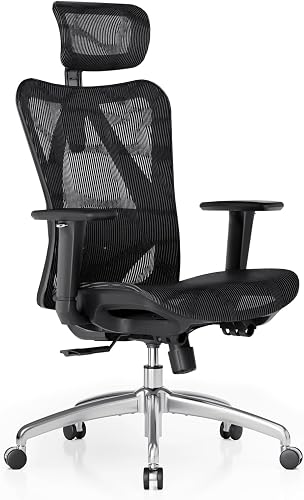 Best for spine pressure reliefCheck it
- 5
 Check it
ELABEST X100 Chair with Footrest
Best for long shifts - 6
 Check it
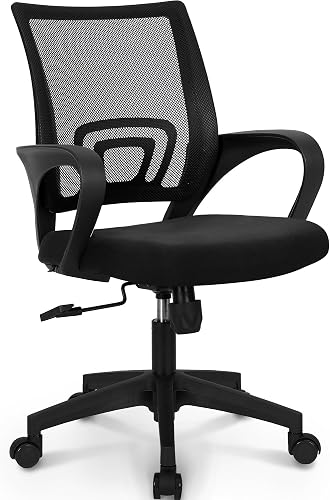
NEO CHAIR Office Computer Chair Gaming Mid-Back
Best for mixed work and gaming - 7
 Check it
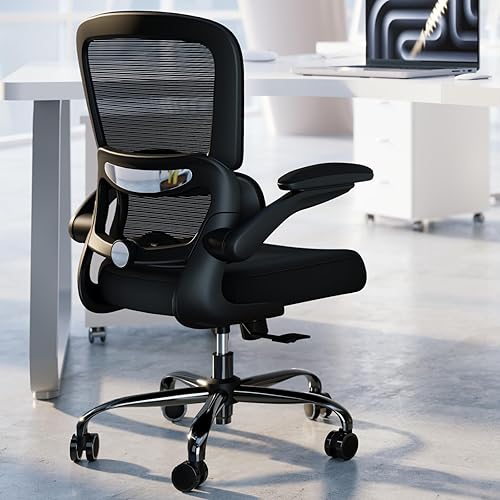
TRALT Mesh Chair with Lumbar Support
Best for lower back support - 8
 Check it
XISHE Mesh Back Leather Desk Chair
Best for easy cleaning - 9
 Best for style-led officesCheck it
The best ergonomic mesh office chairs by need
The BestOffice wins overall on price tier, weight and the adjustments most people actually use. Every other pick earns its place by solving a narrower problem, from a headrest for reclining to arms that fold away under the desk.
BestOffice Ergonomic Office Chair: Best for most desks
- Ventilated mesh back
- Curved mid-back with lumbar support
- Adjustable seat height 17.1–20.3 in
- BIFMA-certified parts, 250 lb capacity
A light, simple mesh chair with the adjustments most desk workers actually use. The low price tier and quick assembly make it an easy first ergonomic chair.
Pros
- Breathable mesh back for warm rooms
- Height range suits shorter desks
- Ships at 19 lb for easy moving
Cons
- Mid-back only, no headrest
- 250 lb capacity is the lowest here
The BestOffice is the easy first ergonomic chair for a home desk. Its mesh back is fully ventilated, so air moves across your back in a warm room, and the curved mid-back carries a built-in lumbar support that sits against your lower spine without extra setup.
The seat adjusts from 17.1 to 20.3 inches, a range that works under most standard desks. Sponge cushioning gives the seat some give for long sessions, and the tilt tension knob lets you change the seat angle between focused work and a short break.
The backrest is 16.5 inches wide and the chair measures 18 inches deep, so it fits a compact room without crowding the space behind the desk. The alloy steel frame keeps the footprint steady, and the tapered legs leave room for your feet to move.
At 19 lb it's the lightest chair here, which matters if you move it between rooms or lift it onto a rug. The BIFMA-certified parts and 250 lb rating cover typical adult use.
Assembly takes about 10 to 15 minutes with the included hardware.
Skip it if you want a headrest or a higher weight rating. Pick the Marsail or GABRYLLY instead for those.
Marsail High Back Mesh Chair: Best for adjustable lumbar support
- High mesh back
- 2D headrest and 3D armrests
- Lumbar adjusts 1.18 in deep and 2.16 in tall
- 330 lb capacity
The lumbar pad moves in two directions, so you can line it up with your lower back. A headrest and 3D arms add support for long sessions.
Pros
- Lumbar adjusts forward, back and up, down
- 330 lb capacity
- Flip-up arms free desk space
Cons
- Heavier than the BestOffice at 30.4 lb
- Assembly required
The Marsail is the pick when your lower back needs more than a fixed pad. Its lumbar support moves 1.18 inches forward and back and 2.16 inches up and down, so you can line it up with the curve of your spine rather than settling for wherever the pad sits.
A 2D headrest tilts and lifts for neck support when you lean back. The 3D arms move forward, back and side to side, and flip up when you want to slide the chair under the desk.
Recline runs from 90 to 120 degrees.
The seat uses 3.14 inches of high-density foam and the chair holds up to 330 lb, which is a step up from the BestOffice's 250 lb. The wider seat spreads load over a larger area, which helps on long days.
The mesh back molds to your back and keeps air moving behind you.
It weighs 30.4 lb, so it's less portable and more of a fixed desk chair. Choose it for long sessions with a headrest and a tailored lumbar fit.
Skip it if you want the lightest, simplest chair for a small room.
GABRYLLY High Back Ergonomic Chair: Best for bigger frames
- Wide mesh seat, 20.5 in across
- Headrest and flip-up arms
- 90–120° tilt lock
- 300 lb capacity
A wide seat and tall back suit people who find mid-back chairs too small. Folding arms let it tuck under a desk when the workday ends.
Pros
- Wide 20.5 in seat
- Flip-up arms save space
- Fits users about 5'2" to 6'1"
Cons
- Armrests adjust in height only
- Bigger footprint than the BestOffice
The GABRYLLY suits bigger frames. Its seat is 20.5 inches wide and 20 inches deep, so there's room to shift your weight without hanging over the edge.
GABRYLLY recommends it for users about 5'2" to 6'1".
The high mesh back carries a headrest and a lumbar pad, and the arms fold up 45 degrees so the chair tucks under the desk. Tilt locks in three stages between 90 and 120 degrees.
The mesh seat keeps airflow moving under you as well as behind you.
The 300 lb rating and wide seat make it a strong fit for taller or broader users who find mid-back chairs cramped. The seat uses a waterfall edge so the front doesn't press into your thighs, and the five-point base keeps the chair steady when you lean back.
The trade-off is size: the bigger footprint needs more room behind the desk. The arms adjust in height only, so you can't move them forward or back to match the desk edge.
Pick it when the BestOffice seat feels narrow. Skip it in a tight corner where the chair stays pushed in all day.
SIHOO M57 Mesh Office Chair: Best for spine pressure relief
- Split backrest with lumbar pad
- Headrest and 3D armrests
- 90–126° recline
- 330 lb capacity
The split backrest cushions the spine while the lumbar pad moves up, down and in or out. The widest recline here makes it the pick for switching postures often.
Pros
- Lumbar pad adjusts in height and depth
- Reclines to 126°
- Aluminum base
Cons
- More adjusters to set up at first
- Heavier than the mid-back picks
The SIHOO M57 focuses on spine pressure. Its split backrest cushions either side of the spine, and the lumbar pad adjusts in height and depth so it tracks your lower back as you move.
The headrest tilts and lifts for neck support.
Recline reaches 126 degrees, the widest here, which makes it the best pick if you change posture often through the day. A 3D armrest set and a smooth height lift with 360 degree swivel cover the rest.
The reinforced aluminum base carries up to 330 lb.
SIHOO says the seat has a waterfall edge to support your thighs and improve circulation. The backrest is 20.07 inches wide, giving broader coverage than the BestOffice.
SIHOO says every key part is tested and certified to BIFMA and SGS standards, and it backs the chair with a 3-year warranty and 30-day returns.
It's heavier than the mid-back picks, so moving it between rooms takes more effort. Choose it for long days with plenty of recline and a split back.
Skip it if you want the simplest setup or the lowest weight.
ELABEST X100 Chair with Footrest: Best for long shifts
- 3D dynamic lumbar support
- 5D flip-up arms
- 18 in extendable footrest
- 300 lb capacity
The footrest and 3-stage recline turn the chair into a place to lean back between tasks. The lumbar pad tracks your back as you move.
Pros
- Extendable footrest with two angle positions
- 5D arms adjust six ways
- Seat height 18.3–23 in
Cons
- 43 lb makes it the heaviest pick
- Costs more than the simple mesh chairs
The ELABEST X100 is built for long shifts that mix focus and rest. An 18 inch footrest extends with two angle positions, and the 3-stage recline lets you lean back between tasks without leaving the chair.
Its 3D lumbar pad is spring-loaded and tracks your back as you shift, with depth, height and rotation adjustment. The 5D arms adjust in six ways and flip up for desk clearance.
The seat height runs from 18.3 to 23 inches.
ELABEST says the dual-stripe mesh offers better airflow and elasticity than standard mesh. The headrest carries a 3D shape with a cervical curve, and the backrest is 20.2 inches wide.
The 300 lb rating covers most users, though the 43 lb weight makes this the heaviest chair here.
The seat also reaches 23 inches high, so it suits taller desks and taller users. Pick it if you work long hours and want to recline with your feet up.
Skip it for a small office where the footrest and recline would crowd the desk.
NEO CHAIR Office Computer Chair Gaming Mid-Back: Best for mixed work and gaming
- Breathable mesh back with lumbar support
- Sponge seat with fabric cover
- Height and tilt adjust
- 250 lb capacity
A budget-friendly mesh chair for a desk that sees work in the day and gaming at night. Fixed arms keep the setup simple.
Pros
- Mesh back stays cool during long sessions
- Tilt and swivel for relaxed gaming
- Light at 19.4 lb
Cons
- Fixed armrests cannot adjust
- Mid-back only
The NEO CHAIR is the budget-friendly option for a desk that switches between work and gaming. Its mesh back carries built-in lumbar support, and the sponge seat has a fabric cover that feels softer than plain mesh.
Height, tilt and 360 degree swivel adjust for everyday use. A metal base and gas lift carry 250 lb, and an internal wood structure helps the chair keep its shape.
Fixed arms keep the setup simple.
It weighs 19.4 lb, so it's easy to move. The mesh back stays cool during long sessions, and the tilt lets you lean back during a game.
The backrest is 17.7 inches wide, close to the BestOffice, and the fixed arms sit at a height that suits a standard desk.
The trade-off is adjustment: the arms are fixed and there's no headrest. Choose it for a first desk chair on a tight budget.
Skip it if you want a headrest or arms you can reposition.
TRALT Mesh Chair with Lumbar Support: Best for lower back support
- Adjustable lumbar pad
- High-resilience molded foam seat
- Class 3 BIFMA gas lift
- 330 lb capacity
A mesh chair that puts the budget into the seat foam and lumbar pad rather than a headrest. The depth-adjustable lumbar pad is the standout feature.
Pros
- Lumbar pad adjusts in depth
- 330 lb capacity with metal-reinforced base
- Fits users about 5'4" to 6'2"
Cons
- No headrest
- Armless design
The TRALT puts its budget into the seat and lumbar pad instead of a headrest. The lumbar pad adjusts in depth to match your spine's curve, and the molded foam seat is built to hold its shape longer than budget foam.
A Class 3 BIFMA gas lift holds the seat height reliably between 17.7 and 21.7 inches. The base has a metal core and carries 330 lb, with silent casters for hardwood or carpet.
The mesh back stays breathable and won't peel like faux leather.
The seat is 19.7 inches wide with a 17.3 inch depth, which TRALT sizes for users about 5'4" to 6'2". The narrower depth leaves the recommended gap behind your knees, which protects circulation.
It's the best fit for lower back support on a mid-range budget.
Skip it if you want arms or a headrest. The chair is armless, so your desk edge carries your forearms instead.
XISHE Mesh Back Leather Desk Chair: Best for easy cleaning
- PU leather seat over sponge
- Mesh back with adjustable lumbar
- 90° flip-up arms
- 300 lb capacity
The PU leather seat wipes clean while the mesh back still lets air through. A good fit for shared desks, craft rooms and homes with pets or kids.
Pros
- Wipe-clean PU leather seat
- Flip-up arms save space
- Seat height 17.72–22.44 in
Cons
- Leather seat feels warmer than mesh
- Mid-back without a headrest
The XISHE mixes a mesh back with a PU leather seat that wipes clean. That makes it the practical pick for a shared desk, a craft room or a home with kids and pets, where spills and crumbs are part of the day.
The mesh back still breathes and carries an adjustable lumbar pad that moves up and down. The seat height runs from 17.72 to 22.44 inches, and the arms flip up 90 degrees to save space.
Tilt rocking lets you switch between work and rest.
The 300 lb rating and SGS and BIFMA testing cover daily use. The seat uses a thickened sponge under the leather, so it stays soft for long sits.
The backrest is 18 inches wide and the S-shaped curve follows the spine.
The leather seat feels warmer than mesh, which is the trade-off in a hot room. Choose it when easy cleaning matters more than a fully breathable seat.
Skip it if you run warm and want mesh under you as well as behind you.
HOLLUDLE V Back Mesh Chair: Best for style-led offices
- V-shaped mesh back in silver
- 3D lumbar support
- 2D headrest and 3D armrests
- 350 lb capacity
The V-back design stands out in a home office while the 3D lumbar pad and arms handle comfort. The highest weight capacity here.
Pros
- 350 lb capacity
- 3D lumbar and 3D arms
- 3-level tilt lock
Cons
- Lowest score in this roundup
- Assembly takes 20–30 minutes
The HOLLUDLE V Back stands out for its look as much as its support. The V-shaped mesh back in silver gives a home office a modern edge, and the chair carries the highest weight rating here at 350 lb.
Support is thorough: 3D lumbar that adjusts up, down, forward, back and rotation, a 2D headrest that tilts and lifts, and 3D arms that move in height, depth and angle. A 3-level tilt lock covers work, gaming and rest.
HOLLUDLE says the base and steel mechanism meet BIFMA and EN1335 standards. The backrest is 20.28 inches wide, so it covers the shoulders as well as the spine.
Assembly takes 20 to 30 minutes, longer than the simple picks.
It's the lowest score here because the price tier sits above the BestOffice without adding much for a basic desk setup. Pick it when the V-back look and the 350 lb rating matter.
Skip it for a plain office where style counts for less.
How these mesh office chairs compare
The nine picks split into three groups by how much adjustment they add around the mesh. Knowing the group you need narrows the choice fast.
| Chair | Seat height | Weight capacity | Headrest | Arms |
|---|---|---|---|---|
| BestOffice | 17.1–20.3 in | 250 lb | No | Fixed |
| Marsail | Adjustable | 330 lb | 2D | 3D, flip-up |
| GABRYLLY | 18.9–23.6 in | 300 lb | Yes | Flip-up |
| SIHOO M57 | Adjustable | 330 lb | Yes | 3D |
| ELABEST X100 | 18.3–23 in | 300 lb | Yes | 5D, flip-up |
| NEO CHAIR | Adjustable | 250 lb | No | Fixed |
| TRALT | 17.7–21.7 in | 330 lb | No | Armless |
| XISHE | 17.72–22.44 in | 300 lb | No | Flip-up |
| HOLLUDLE | Adjustable | 350 lb | 2D | 3D |
| Product | Best for | Back style | Seat height | Weight capacity | Our score |
|---|---|---|---|---|---|
| BestOffice Ergonomic Office Chair | most desks | Mesh mid-back | 17.1–20.3 in | 250 lb | 9.6 |
| Marsail High Back Mesh Chair | adjustable lumbar support | High mesh back | 330 lb | 8.8 | |
| GABRYLLY High Back Ergonomic Chair | bigger frames | High mesh back | 300 lb | 8.7 | |
| SIHOO M57 Mesh Office Chair | spine pressure relief | Split high back | 330 lb | 8.6 | |
| ELABEST X100 Chair with Footrest | long shifts | Mesh high back | 300 lb | 8.6 | |
| NEO CHAIR Office Computer Chair Gaming Mid-Back | mixed work and gaming | Mid-back mesh | 250 lb | 8.5 | |
| TRALT Mesh Chair with Lumbar Support | lower back support | Mesh back | 17.7–21.7 in | 330 lb | 8.2 |
| XISHE Mesh Back Leather Desk Chair | easy cleaning | Mesh back | 300 lb | 8.0 | |
| HOLLUDLE V Back Mesh Chair | style-led offices | V-shaped mesh | 350 lb | 7.8 |
The simple group (BestOffice, NEO CHAIR) covers a basic desk with a mesh back and height adjust. The mid group (Marsail, GABRYLLY, TRALT, XISHE) adds a headrest, deeper lumbar or wipe-clean seating.
The full-adjustment group (SIHOO, ELABEST, HOLLUDLE) gives you the most ways to fit the chair to your body.
Our score weighs specs, features and buyer feedback against what you're shopping for. A chair with more adjusters scores higher when those adjusters solve real fit problems, not when they just add steps.
A split backrest or a lumbar pad that moves in depth earns points for a long workday; a fixed mid-back loses them only when the buyer needs that support.
How we compared these chairs
We compared the mesh backs, seat dimensions, height ranges, weight ratings and arm styles across all nine chairs. Each score reflects how well those specs fit the job the badge names, not just how many features a chair lists.
A headrest and 3D arms matter more for a long workday than for a two-hour evening desk. A 250 lb rating is fine for many users but tight for others.
We scored each chair against the buyer it suits best.
We also weighed real trade-offs: weight, assembly time and footprint. A heavier chair with more adjusters is the better long-session pick, but a poor fit for a small room you rearrange often.
The verdict lines up with those splits.
The specifications we scored against each badge
For "best for most desks," we looked for a mesh back, built-in lumbar support, a seat height that covers standard desks and a light frame. The BestOffice meets all four, which is why it leads.
For the fit-focused badges, we weighed the adjustment range. The Marsail's lumbar travels in two directions, the GABRYLLY's seat is the widest here, and the SIHOO's split back and 126 degree recline set it apart.
The TRALT and XISHE earn their places on seat construction and seat cover, not on arm count.
For the heavy-duty badge, we looked at weight ratings and base construction. The HOLLUDLE lists the highest rating at 350 lb, and the Marsail and TRALT sit close behind at 330 lb with reinforced bases.
The BestOffice and NEO CHAIR land at 250 lb, which is why their badges are narrower.
What should you check before buying a mesh office chair?
Check seat height, seat width and weight capacity against your desk and your body before anything else. A chair that misses on those three will feel wrong no matter how many features it lists.
Seat height and desk clearance
Your feet should rest flat with your knees near a right angle. The BestOffice and TRALT start around 17 inches, which suits shorter desks.
If your desk is tall or you're taller than average, look at the GABRYLLY and ELABEST, which reach into the 23 inch range.
Measure the gap under your desk first. Arms that don't clear the edge force you to sit too far back.
The XISHE and GABRYLLY both flip their arms up, which clears even a shallow gap.
Seat width and depth
A narrow seat digs into your hips and thighs. The GABRYLLY's 20.5 inch width and the TRALT's 19.7 inch width suit broader frames.
A 16.5 inch backrest like the BestOffice's fits smaller users well.
Seat depth matters too. You want two to four fingers of space behind your knees so the edge doesn't press into your legs.
The TRALT's 17.3 inch depth and the GABRYLLY's 20 inch depth sit at opposite ends of the range here.
Weight capacity
Ratings here run from 250 to 350 lb. Leave some margin rather than buying at your exact weight.
The BestOffice and NEO CHAIR sit at 250 lb, while the Marsail and TRALT hold 330 lb and the HOLLUDLE lists 350 lb.
The base construction matters as much as the number. The Marsail and SIHOO use reinforced bases, and the TRALT has a metal core inside its nylon base.
A high rating on a light base is worth checking against the frame material.
Armrests and headrests
Fixed arms keep a setup simple and cheap. Adjustable arms help you line up your forearms with the desk, which takes strain off your shoulders.
Flip-up arms free space when the chair is not in use.
A headrest only earns its place if you recline. If you sit upright all day, a mid-back chair gives the same support without the extra height.
The SIHOO and ELABEST headrests adjust in more than one direction, which helps you place them at neck height.
Mesh quality and airflow
Every chair here has a breathable mesh back. The difference is in the seat: a mesh seat breathes best, PU leather wipes clean, and foam feels softer.
ELABEST says its dual-stripe mesh improves airflow over standard mesh.
The backrest width also shapes how much air reaches your back. A 16.5 inch back like the BestOffice's covers the spine and little else, while the SIHOO's 20.07 inch and HOLLUDLE's 20.28 inch backs cover the shoulders too.
Which mesh office chair fits your body?
Fit comes down to height, weight and how you sit. The right chair is the one whose adjustment range covers your body, not the one with the longest feature list.
For shorter and average users
The BestOffice and XISHE start around 17 inches, which works for most average-height users at a standard desk. If you're under about 5'4", check that the lowest seat height still lets your feet reach the floor.
For taller and broader users
The GABRYLLY is the clearest pick, with a wide 20.5 inch seat and a fit range up to 6'1". The TRALT covers users up to about 6'2" and the Marsail's 330 lb rating gives broader users margin.
The ELABEST seat also reaches 23 inches, which suits taller desks and longer legs. If you're near 6'1", compare the GABRYLLY's seat depth against the ELABEST's 26 inch footprint before you decide.
For reclining and long sessions
The SIHOO M57 reclines to 126 degrees with a split back and a headrest. The ELABEST X100 adds an 18 inch footrest for leaning back between tasks.
Both are better than the simple mid-backs if you recline daily.
The Marsail and GABRYLLY stop at 120 degrees but add flip-up arms, which keep the chair under the desk when you sit upright. A 120 degree tilt covers most reading and thinking breaks without the extra footprint of a full recliner.
Setup and daily use for a mesh chair
Most chairs here assemble in 10 to 30 minutes with the included tools. The BestOffice and NEO CHAIR take about 10 to 15 minutes, while the HOLLUDLE takes 20 to 30.
Set the seat height first, then the lumbar pad. Line the pad up with the small of your back, not the middle.
Adjust the arms last so your forearms rest level with the desk.
Wipe mesh with a damp cloth and mild soap. For the XISHE's PU leather seat, a wipe-down handles most spills.
Check the casters and the gas lift now and then; a Class 3 BIFMA lift like the TRALT's holds its height longer than a budget cylinder.
A headrest, lumbar pad and footrest only help if they sit in the right place. Take five minutes to set them before your first long session.
Then leave the settings alone for a week and note where you feel pressure; small tweaks after that are easier than starting over.
Verdict: which ergonomic mesh office chair should you buy?
The BestOffice Ergonomic Office Chair is the best ergonomic mesh office chair for most desks, with the simplest mix of mesh airflow, lumbar support and a height range that fits standard desks.
Pick the Marsail for a headrest and lumbar you can adjust in two directions. Pick the GABRYLLY for a wide seat in a bigger frame, or the SIHOO M57 if you recline often.
Choose the ELABEST X100 for an 18 inch footrest, the TRALT for armless lower back support, the XISHE for a wipe-clean seat, or the HOLLUDLE for the V-back look and a 350 lb rating.
Start with your seat height and weight rating, then add the features you'll actually use. For a deeper look at specific models, read our FelixKing mesh office chair review and our GABRYLLY ergonomic office chair review.
Our top 3 picks at a glance
-
1
-
2
-
3
Frequently asked questions
Is a mesh office chair better than a foam-backed chair?
A mesh back lets air pass through, so it stays cooler in warm rooms and dries faster. Foam or fabric backs can feel softer at first, but mesh holds its shape and does not trap heat the same way.
Pick mesh if you sit for long stretches and your room runs warm.
What seat height should I look for in an ergonomic mesh chair?
Aim for a seat height that puts your feet flat on the floor with your knees near a right angle. Most picks here adjust between about 17 and 22 inches, which covers shorter and taller desks.
Measure your desk first so the arms still slide under it.
Do I need a headrest on a mesh office chair?
Only if you recline often. A headrest helps when you lean back to read or rest between tasks.
If you sit upright all day, a mid-back chair like the BestOffice gives you the same back support without the extra height.
How much weight can these mesh office chairs hold?
The picks here are rated between 250 and 350 lb. The BestOffice and NEO CHAIR top out at 250 lb, while the Marsail and SIHOO hold 330 lb and the HOLLUDLE lists 350 lb.
Check the rating against your own weight with some margin to spare.
Are mesh office chairs good for long workdays?
Yes, when the chair has lumbar support and a seat you can adjust to the right height. Mesh keeps airflow moving across your back during long sessions.
Add a headrest and adjustable arms if you recline or change posture often.


